Adobe Firefly AI Is Coming to Walt Disney Imagineering

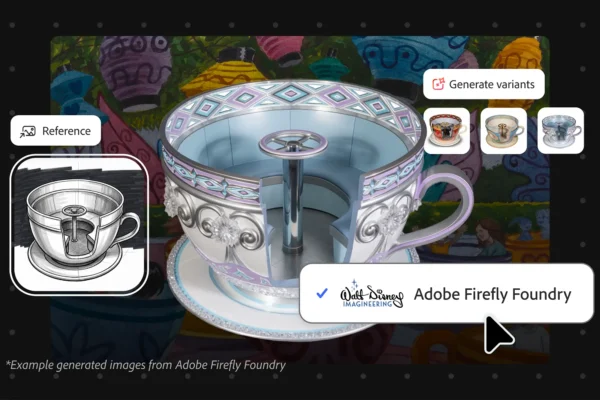
Adobe and Walt Disney Imagineering have announced a partnership that will bring custom generative AI tools into Disney’s theme park design process. The collaboration uses Adobe Firefly Foundry, a platform that will allow Disney to train AI models using its library of creative materials.
According to Adobe, Imagineers will use the technology during the concept and pre-production phases of projects to bring them to the parks faster. That includes:
- Turning rough sketches into finished concept art
- Generating artwork based on Disney IPs like Mickey & Friends, Frozen, Moana, Lilo & Stitch, and Cars
- Converting 2D artwork into 3D prototypes for planning, material estimates, and coordinating with engineering
Basically, Disney wants to shorten the time between an idea and workable concepts. We discussed similar speedy workflows when we covered Disney’s collaboration with Haddy, an AI-powered 3D printing company.
Look, I know AI isn’t going away, but when I see “generative” in a press release about Disney Imagineering, I get a little nervous. I’ve been an Adobe user for decades. I love their tools. I even use Photoshop’s and Illustrator’s AI features in my day job. But you won’t find any AI edits in my theme park photos.
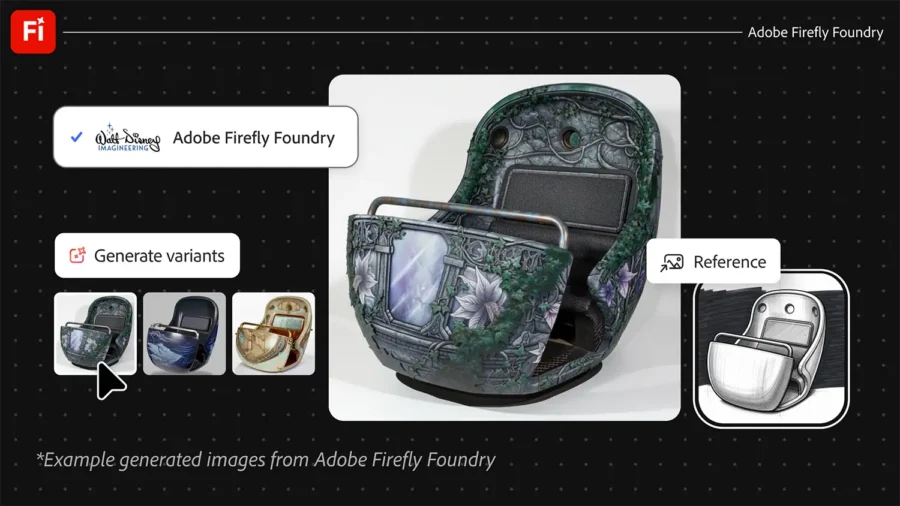
This announcement once again raises a question creative professionals have been asking for the last few years: where exactly is the line? If Imagineering is going to use AI to iterate, then great. Theme park projects don’t usually start with a single idea. They start with dozens. If AI helps an Imagineer explore 50 ideas instead of 10, I’m 100% on board. In that case, people are still making the creative decisions.
We’re at the point where design tools are making another major leap forward. The last time I remember seeing a shift like this was with Jurassic Park. ILM’s Steve Williams and Mark Dippé believed the film’s dinosaurs should be animated with CGI. But Dennis Muren, ILM’s Creative Director. wanted stop motion. So Williams and Dippé programmed a test sequence and made sure Kathleen Kennedy saw it while visiting the shop. We know how that turned out.
ILM was never the same. The CGI department exploded. The model shop eventually closed. Some artists successfully made the transition. Others didn’t. But at least people were still being replaced by other people. That’s where AI feels different.
Kyle Laughlin, Imagineering’s SVP of Research & Development, seems to understand the concern: “At Imagineering, we’ve always believed technology and human creativity can work together responsibly.”
Imagineering has spent decades proving what talented storytellers, artists, and engineers can create when they work together. If AI helps them do that faster, cool. But let’s keep our eye on the ball. I may be able to open Adobe Illustrator and prompt my way to a Doom Buggy design, but that doesn’t make me an Imagineer.